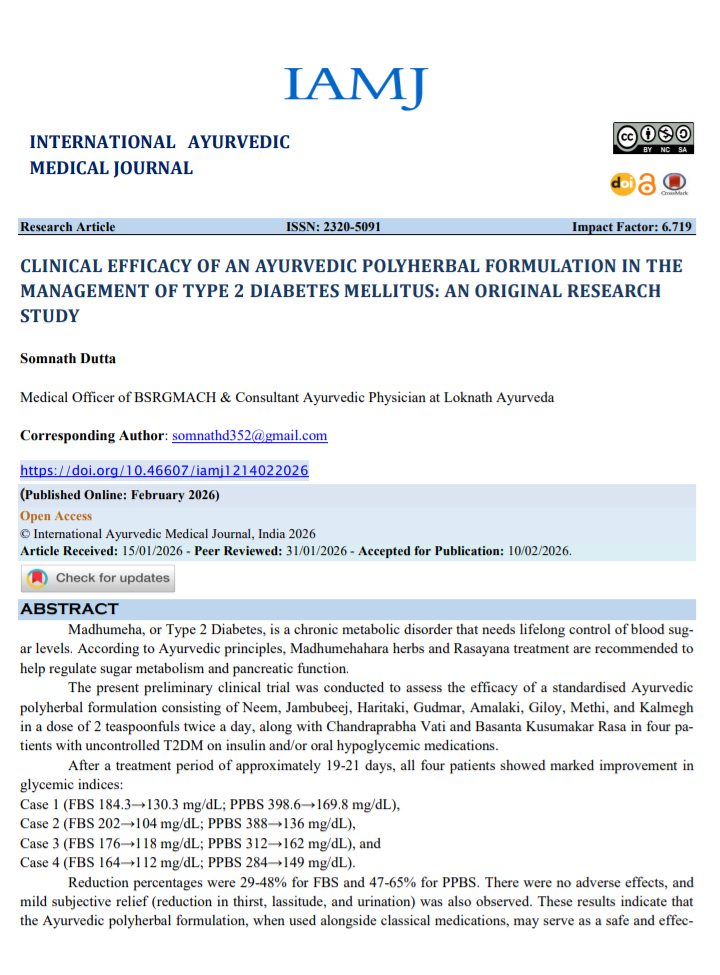
Clinical Efficacy of an Ayurvedic Polyherbal Formulation in the Management of Type 2 Diabetes Mellitus: An Original Research Study
Diabetes Mellitus, particularly Type 2 Diabetes Mellitus (T2DM), is one of the most rapidly growing metabolic disorders worldwide. It is characterized by chronic hyperglycemia caused by impaired insulin secretion, insulin resistance, or both. Long-term complications of diabetes may affect the cardiovascular system, kidneys, eyes, and nerves, making effective and safe treatment strategies essential.
In this context, traditional systems of medicine such as Ayurveda provide valuable therapeutic approaches using herbal formulations that aim to regulate metabolism, improve insulin sensitivity, and support long-term glycemic control.
Dr. Somnath Dutta (B.A.M.S.), an Ayurvedic physician and clinical researcher based in Raiganj, Uttar Dinajpur, West Bengal, has contributed to this field through his research article titled:
“Clinical Efficacy of an Ayurvedic Polyherbal Formulation in the Management of Type 2 Diabetes Mellitus: An Original Research Study.”
The article is published in the International Ayurvedic Medical Journal (IAMJ), a peer-reviewed platform dedicated to advancing scientific understanding of Ayurveda.
Background of the Study
Ayurveda describes diabetes under the broad concept of Prameha, particularly Madhumeha, which involves disturbances in Kapha, Meda (adipose tissue), and Mutravaha Srotas. Management strategies focus on correcting metabolic imbalance through herbal formulations, dietary regulation, and lifestyle modification.
Polyherbal formulations are widely used in Ayurveda because they combine multiple medicinal plants that act synergistically. Research has shown that such formulations can significantly improve blood glucose control, lipid metabolism, and insulin sensitivity in patients with Type 2 diabetes.
Objectives of the Research
The main objective of this study was to evaluate the clinical effectiveness of a specific Ayurvedic polyherbal formulation in managing Type 2 Diabetes Mellitus and improving glycemic parameters in affected patients.
The research aimed to assess:
- Changes in fasting blood glucose levels
- Improvement in postprandial blood sugar
- Overall metabolic regulation
- Safety and tolerability of the formulation
Key Findings
The study demonstrated that the Ayurvedic polyherbal formulation showed promising therapeutic effects in improving glycemic control among patients with Type 2 Diabetes Mellitus.
The findings support the Ayurvedic principle that multi-herb formulations can provide a holistic approach to metabolic disorders, targeting multiple physiological pathways simultaneously. Such therapies may help reduce complications and improve quality of life when used appropriately under medical supervision.
Significance of the Study
This original research contributes to the growing body of evidence supporting evidence-based Ayurveda. It highlights the potential role of herbal formulations as complementary or supportive therapies in the long-term management of diabetes.
Through scientific documentation and peer-reviewed publication, the study strengthens the integration of traditional Ayurvedic knowledge with modern clinical research.
Access the Full Research Article
Media Coverage: TV Interview on the Research
Following the publication of this research on Type 2 Diabetes Mellitus and Ayurvedic Polyherbal Formulation, the work received media attention from a local television news channel. The channel conducted a special interview with Dr. Somnath Dutta to discuss the research findings, the importance of evidence-based Ayurveda, and the potential role of herbal formulations in diabetes management.
During the interview, Dr. Dutta explained the background of the study, the Ayurvedic understanding of Madhumeha (Diabetes), and how scientifically documented herbal formulations may contribute to better metabolic regulation and patient outcomes. The discussion also highlighted the importance of integrating traditional Ayurvedic knowledge with modern clinical research.
This media coverage reflects growing public interest in research-based Ayurvedic healthcare and highlights the importance of scientific publications in strengthening the credibility of traditional medicine.
